
Answer Key Chapter 8 – Algebra and Trigonometry 2e | OpenStax
Try It
8.1 Graphs of the Sine and Cosine Functions
1. 
2.  compressed
3.  ; right
4. 2 units up
5. midline:  ; amplitude:
  ; period:
 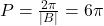 ; phase shift:
6. 
7. two possibilities:  or
or 
8.
midline: ; amplitude:  ; period:
  ; phase shift:
  or none
9.
midline: ; amplitude:  ; period:
  ; phase shift:
10. 7
11. 
8.2 Graphs of the Other Trigonometric Functions
1.
2. It would be reflected across the line  , becoming an increasing function.
3. 
4. This is a vertical reflection of the preceding graph because  is negative.
5.
6.
7.
8.3 Inverse Trigonometric Functions
1. 
2.
 ;
; ;
; ;
;
3. 1.9823 or 113.578°
4.  radians
5. 
6. 
7. 
8. 
9. 
8.1 Section Exercises
1. The sine and cosine functions have the property that  for a certain
  . This means that the function values repeat for every units on the x-axis.
3. The absolute value of the constant (amplitude) increases the total range and the constant  (vertical shift) shifts the graph vertically.
5. At the point where the terminal side of  intersects the unit circle, you can determine that the
  equals the y-coordinate of the point.
7.
amplitude:  ; period:
  ; midline: ; maximum:
  occurs at
  ; minimum:
  occurs at
  ; for one period, the graph starts at 0 and ends at
9.
amplitude: 4; period: ; midline: ; maximum  occurs at
  ; minimum:
  occurs at
  ; one full period occurs from to
11.
amplitude: 1; period: ; midline: ; maximum:  occurs at ; minimum: occurs at ; one full period is graphed from to
13.
amplitude: 4; period: 2; midline: ; maximum: occurs at ; minimum: occurs at 
15.
amplitude: 3; period:  ; midline:
  ; maximum:
  occurs at
  ; minimum:
  occurs at
  ; horizontal shift:
  ; vertical translation 5; one period occurs from to
17.
amplitude: 5; period:  ; midline:
  ; maximum:
  occurs at
  ; minimum:
  occurs at
  ; phase shift: ; vertical translation:
  ; one full period can be graphed on to
19.
amplitude: 1 ; period: ; midline: ; maximum: occurs at  ; maximum: occurs at
  ; minimum: occurs at
  ; phase shift:
  ; vertical translation: 1; one full period is from
  to
to 
21.
amplitude: 1; period:  ; midline: ; maximum: occurs at
  ; minimum: occurs at ; phase shift:
  ; vertical shift: 0
23. amplitude: 2; midline:  ; period: 4; equation:
25. amplitude: 2; period: 5; midline: ; equation: 
27. amplitude: 4; period: 2; midline: ; equation: 
29. amplitude: 2; period: 2; midline ; equation: 
31. 
33. 
35.
37.  is symmetric
39. 
41. Maximum: 1 at ; minimum: -1 at
43. A linear function is added to a periodic sine function. The graph does not have an amplitude because as the linear function increases without bound the combined function  will increase without bound as well. The graph is bounded between the graphs of
  and
and  because sine oscillates between −1 and 1.
45. There is no amplitude because the function is not bounded.
47. The graph is symmetric with respect to the y-axis and there is no amplitude because the function’s bounds decrease as  grows. There appears to be a horizontal asymptote at .
8.2 Section Exercises
1. Since  is the reciprocal function of
  you can plot the reciprocal of the coordinates on the graph of
  to obtain the y-coordinates of
  The x-intercepts of the graph are the vertical asymptotes for the graph of
3. Answers will vary. Using the unit circle, one can show that 
5. The period is the same: 
7. IV
9. III
11. period: 8; horizontal shift: 1 unit to left
13. 1.5
15. 5
17. 
19.
stretching factor: 2; period: ; asymptotes:  where k is an integer
21.
stretching factor: 6; period: 6; asymptotes:  where k is an integer
23.
stretching factor: 1; period: ; asymptotes:  where k is an integer
25.
Stretching factor: 1; period: ; asymptotes:  where k is an integer
27.
stretching factor: 2; period: ; asymptotes: where k is an integer
29.
stretching factor: 4; period:  ; asymptotes:
  where k is an odd integer
31.
stretching factor: 7; period: ; asymptotes:  where k is an odd integer
33.
stretching factor: 2; period: ; asymptotes:  where k is an integer
35.
stretching factor:  ; period: ; asymptotes: where k is an integer
37. 
39. 
41. 
43. 
45. 
47.
49.
51.
53.
55.
 ;
;-
A graph of a half period of a secant function. Vertical asymptotes at x=-pi/2 and pi/2.  and ; the distance grows without bound as approaches —i.e., at right angles to the line representing due north, the boat would be so far away, the fisherman could not see it;
- 3; when
 , the boat is 3 km away;
 - 1.73; when
 , the boat is about 1.73 km away;
 - 1.5 km; when
57.
 ;
;-
An exponentially increasing function with a vertical asymptote at x=60.  : after 0 seconds, the rocket is 0 mi above the ground;
  : after 30 seconds, the rockets is 2 mi high;
- As
 approaches 60 seconds, the values of
  grow increasingly large. The distance to the rocket is growing so large that the camera can no longer track it.
8.3 Section Exercises
1. The function is one-to-one on ![[-\frac{\pi}{2},\frac{\pi}{2}]](https://foundations-of-math12.pressbooks.tru.ca/wp-content/ql-cache/quicklatex.com-200c356c859a85ea8ae96ed8590dfed3_l3.png "Rendered by QuickLaTeX.com") ; thus, this interval is the range of the inverse function of
; thus, this interval is the range of the inverse function of  The function
  is one-to-one on
 ![[0,\pi]](https://foundations-of-math12.pressbooks.tru.ca/wp-content/ql-cache/quicklatex.com-ca409902120b1e6a7482ba6b33fedb74_l3.png "Rendered by QuickLaTeX.com") ; thus, this interval is the range of the inverse function of
; thus, this interval is the range of the inverse function of 
3.  is the radian measure of an angle between and whose sine is 0.5.
5. In order for any function to have an inverse, the function must be one-to-one and must pass the horizontal line test. The regular sine function is not one-to-one unless its domain is restricted in some way. Mathematicians have agreed to restrict the sine function to the interval so that it is one-to-one and possesses an inverse.
7. True . The angle,  that equals
  ,
,  , will be a second quadrant angle with reference angle,
  , where equals
  , . Since is the reference angle for ,
  and =
and =  –
–
9. 
11.
13.
15.
17. 1.98
19. 0.93
21. 1.41
23. 0.56 radians
25. 0
27. 0.71
29. -0.71
31.
33. 0.8
35. 
37. 
39. 
41. 
43. 
45. 
47.
49.
domain ![[-1,1];](https://foundations-of-math12.pressbooks.tru.ca/wp-content/ql-cache/quicklatex.com-82016c9b6b6818896acef00f17fc1908_l3.png "Rendered by QuickLaTeX.com") range
range
51. approximately 
53. 0.395 radians
55. 1.11 radians
57. 1.25 radians
59. 0.405 radians
61. No. The angle the ladder makes with the horizontal is 60 degrees.
Review Exercises
1. amplitude: 3; period: ; midline: ; no asymptotes
3. amplitude: 3; period: ; midline: ; no asymptotes
5. amplitude: 3; period: ; midline: ; no asymptotes
7. amplitude: 6; period: ; midline: ; no asymptotes
9. stretching factor: none; period: ; midline: ; asymptotes:  where
where  is an integer
11. stretching factor: 3; period: ; midline: ; asymptotes:  where is an integer
13. amplitude: none; period: ; no phase shift; asymptotes:  where is an odd integer
15. amplitude: none; period: ; no phase shift; asymptotes:  where is an integer
17. amplitude: none; period: ; no phase shift; asymptotes:  where is an integer
19. largest: 20,000; smallest: 4,000
21. amplitude: 8,000; period: 10; phase shift: 0
23. In 2007, the predicted population is 4,413. In 2010, the population will be 11,924.
25. 5 in.
27. 10 seconds
29.
31.
33.
35. No solution
37. 
39. The graphs are not symmetrical with respect to the line  They are symmetrical with respect to the
  -axis.
41. The graphs appear to be identical.
Practice Test
1. amplitude: 0.5; period: ; midline
3. amplitude: 5; period: ; midline:
5. amplitude: 1; period: ; midline:
7. amplitude: 3; period: ; midline:
9. amplitude: none; period: ; midline:  asymptotes:
  where is an integer
11. amplitude: none; period: ; midline: asymptotes:  where is an integer
13. amplitude: none; period: ; midline:
15. amplitude: 2; period: 2; midline: ; 
17. amplitude: 1; period: 12; phase shift:  ; midline
19. 
21. period: ; horizontal shift: 
23.  ; period: 2; phase shift: 0
25. 4
27. The views are different because the period of the wave is  . Over a bigger domain, there will be more cycles of the graph.
29. 
31. On the approximate intervals 
33. 
35. This graph is periodic with a period of .
37.
39.
41. 
43. 
45. 
47. False
49. approximately 0.07 radians